
Wolffkran Delivers for Television Centre Phase 2 in London
Wolffkran is playing a key role in the second phase of redevelopment at the historic Television Centre in West London, supplying five tower cranes for the project. Originally built in the 1950s as a major BBC production hub, the site is being transformed…
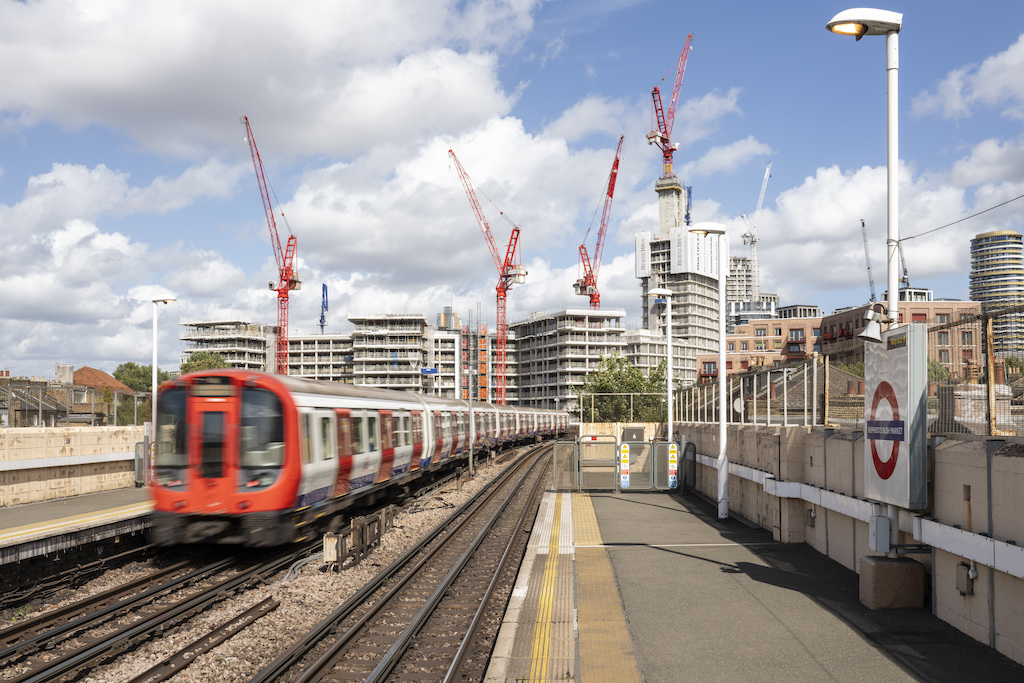
Wolffkran is playing a key role in the second phase of redevelopment at the historic Television Centre in West London, supplying five tower cranes for the project.
Originally built in the 1950s as a major BBC production hub, the site is being transformed into a mixed-use development. Phase 2, which began in early 2024, includes two residential buildings: the 23-storey Ariel tower and the nine-storey Scenery House, delivered for developer Mitsui Fudosan UK and contractor Multiplex Construction.
Four WOLFF 355 B cranes were installed in 2025, including one deployed to construct the tower core using slipform methods. The crane was climbed to a freestanding height of over 95 metres, avoiding the need for tie-ins and reducing potential downtime.
“Although tie-ins on the tower could have been an option, it would have led to downtimes, which is why the customer opted for the freestanding version, which we implemented using a tower combination of the 3.3-meter TV 33 tower element and four TV 20 tower elements,” said Gerard Saville, Senior Sales Manager at Wolffkran Ltd.
Once the concrete core had been completed, the WOLFF 355 B erected a WOLFF 630 B crane on top of the structure, which is now being used to complete the reinforced concrete tower.
The project presents significant logistical challenges due to its location adjacent to the London Underground. Strict oversailing regulations required all cranes to be positioned at the rear of the site, operating within a defined safety zone at reduced lifting capacity.
Despite these constraints, Wolffkran’s high-capacity cranes and compact configurations have enabled efficient lifting operations. The company’s experience in complex urban environments has also been critical in managing tight schedules, limited space, and stringent safety and environmental requirements.