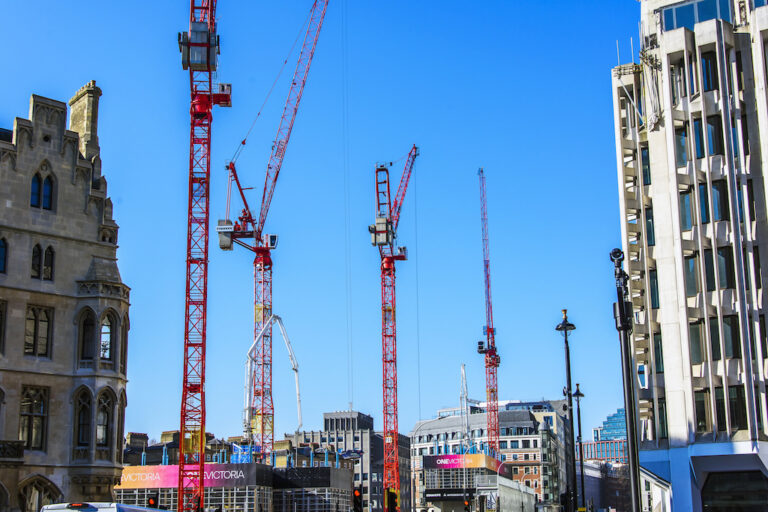

WOLFF Cranes Build Riyadh’s New Cable-Stayed Bridges
Construction of two new cable-stayed bridges alongside Riyadh’s existing Wadi Laban Bridge is progressing with the support of three WOLFF 180 B luffing jib cranes, helping to expand capacity on one of the Saudi capital’s busiest transport corridors. The project,…
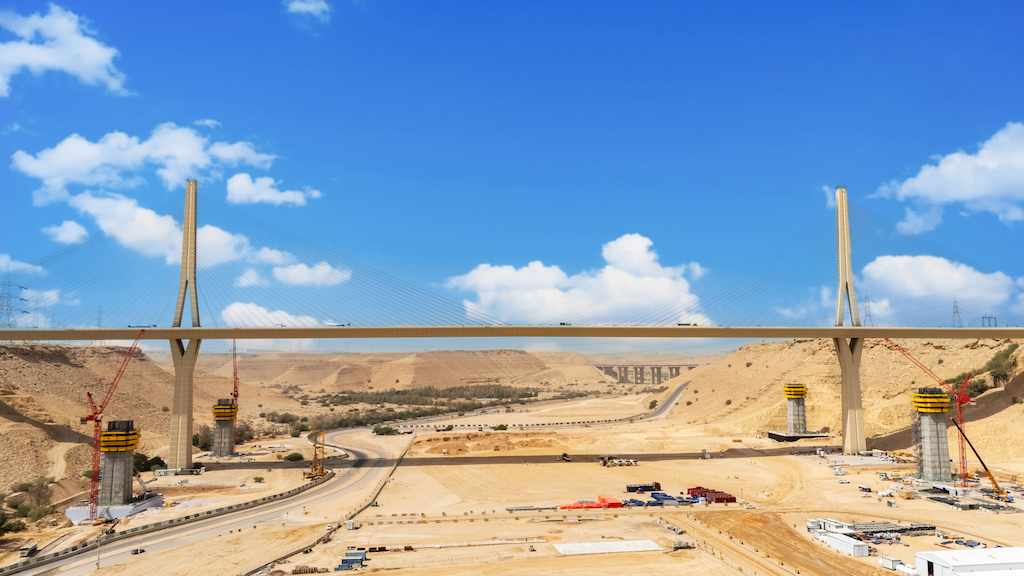
Construction of two new cable-stayed bridges alongside Riyadh’s existing Wadi Laban Bridge is progressing with the support of three WOLFF 180 B luffing jib cranes, helping to expand capacity on one of the Saudi capital’s busiest transport corridors.
The project, commissioned by the Royal Commission for Riyadh City, is being delivered by the ICRC joint venture, comprising Turkish contractor IC Ictas and Saudi Arabia’s Al Rashid Trading & Contracting Company (RTCC). The new bridges are being built alongside the existing Wadi Laban Bridge, which has served as the valley’s only crossing for more than 30 years.
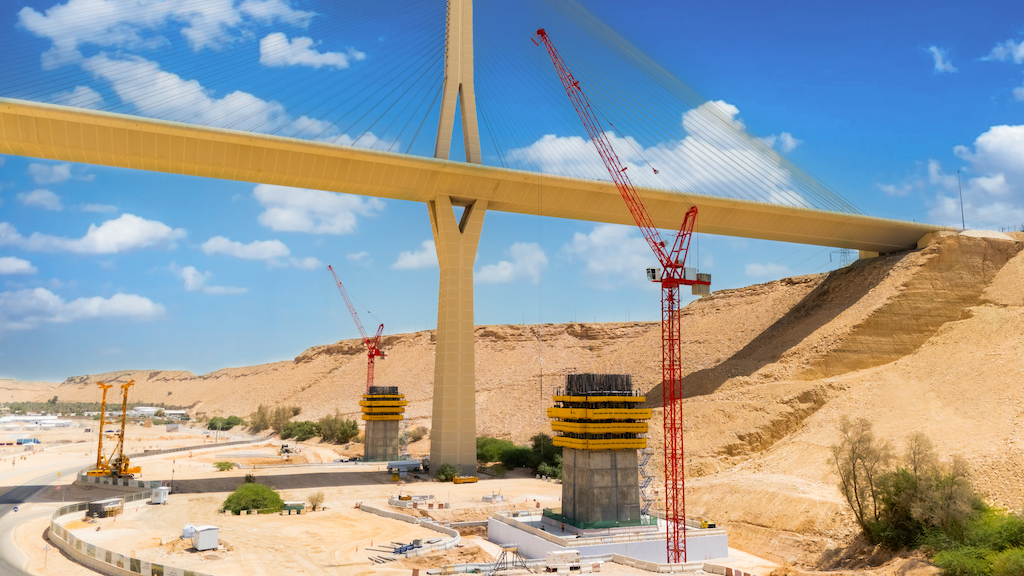
Each of the three WOLFF 180 B cranes is equipped with a 40-metre luffing jib, offers an 18-tonne maximum lifting capacity and operates at a hook height of 157 metres. The cranes are being used to construct four bridge pylons reaching approximately 170 metres in height, handling formwork, reinforcement, concrete placement and the movement of work platforms, surveying equipment and other site materials.
One of the project’s most demanding operations involves repositioning multiple stacked working platforms during formwork changes between pylon sections, requiring the cranes to utilise their full 18-tonne lifting capacity. As construction advances, the cranes will also install support beams weighing up to 12 tonnes for concreting the pylon heads.
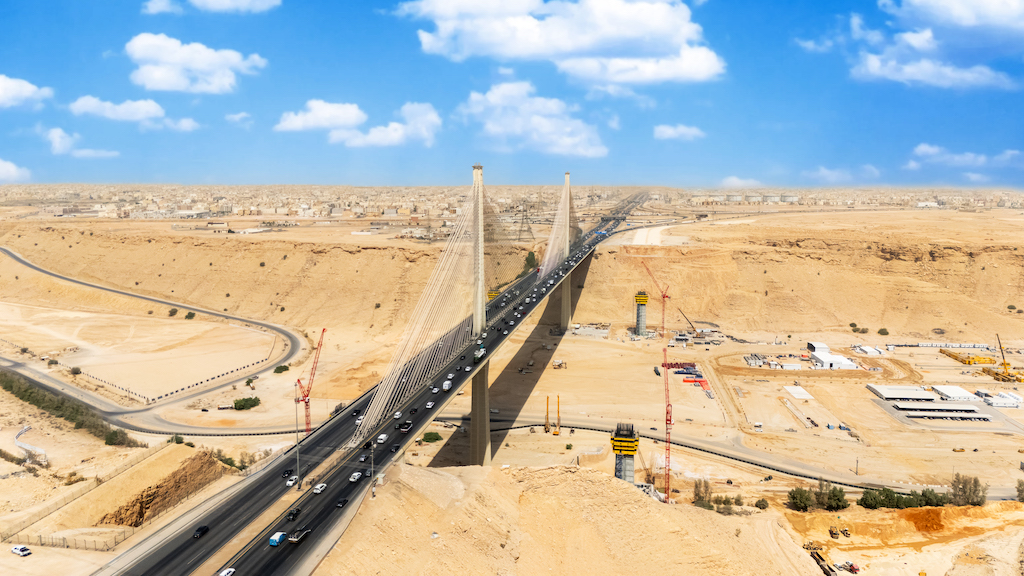
Installed in 2025, the cranes are expected to remain on site until project completion in 2027. Once finished, each cable-stayed bridge will measure approximately 763 metres in length with a 405-metre main span. At around 35 metres wide, the two structures will provide a total of eight traffic lanes, significantly increasing capacity as part of Riyadh’s Main and Ring Road Axes Development Program.