56 Cometto SPMT Axle Lines Move 646t Batavia Ashore
A 646-tonne reconstruction of the 17th-century sailing vessel Batavia was moved ashore at Lelystad, the Netherlands, using 56 Cometto SPMT axle lines, following ten months of engineering and preparation. The full-scale reconstruction of the 1628 Dutch East India Company ship travelled around 250…
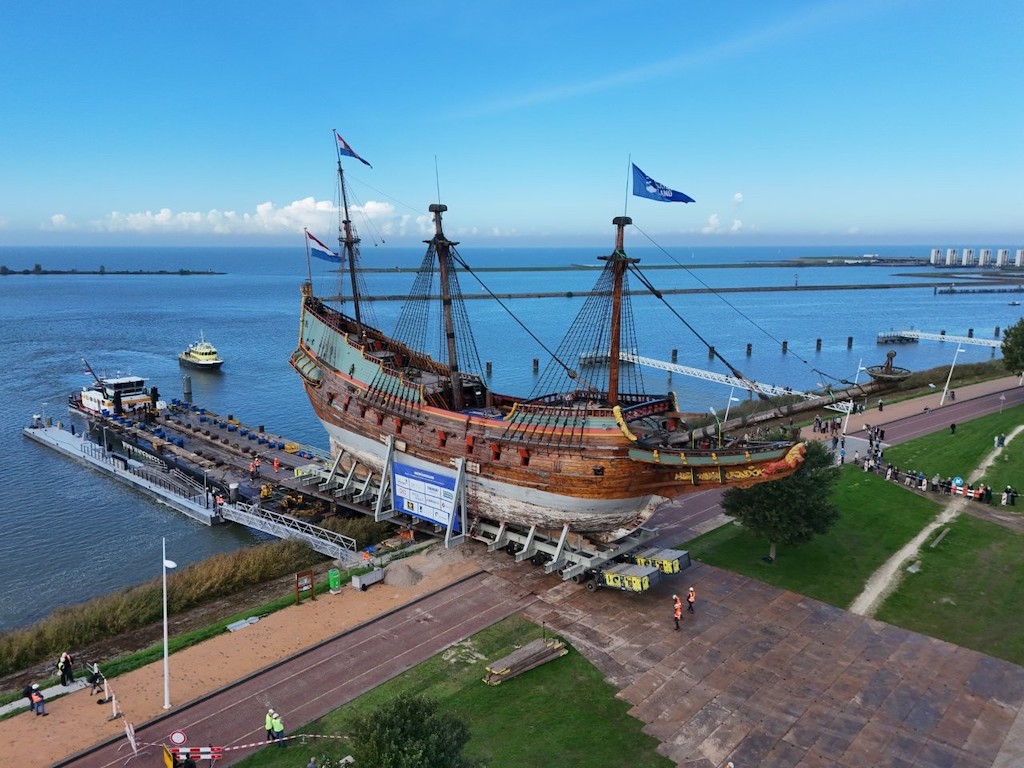
A 646-tonne reconstruction of the 17th-century sailing vessel Batavia was moved ashore at Lelystad, the Netherlands, using 56 Cometto SPMT axle lines, following ten months of engineering and preparation.
The full-scale reconstruction of the 1628 Dutch East India Company ship travelled around 250 metres from a pontoon, across the Markermeer dike and onto the grounds of Museum Batavialand, where it was subsequently lowered onto its permanent concrete foundation.
Q3 Heavy Lift configured the transport using two Cometto SPMT trains of 28 axle lines each. The unusually high axle count was determined not simply by the transport weight, but by the need to distribute loads over a sufficiently large area of the purpose-built cradle and minimise deflection beneath the vulnerable wooden hull.
The Batavia weighed approximately 646 tonnes for the move, with its 39.7 x 15.5 metre cradle adding a further 101.2 tonnes.
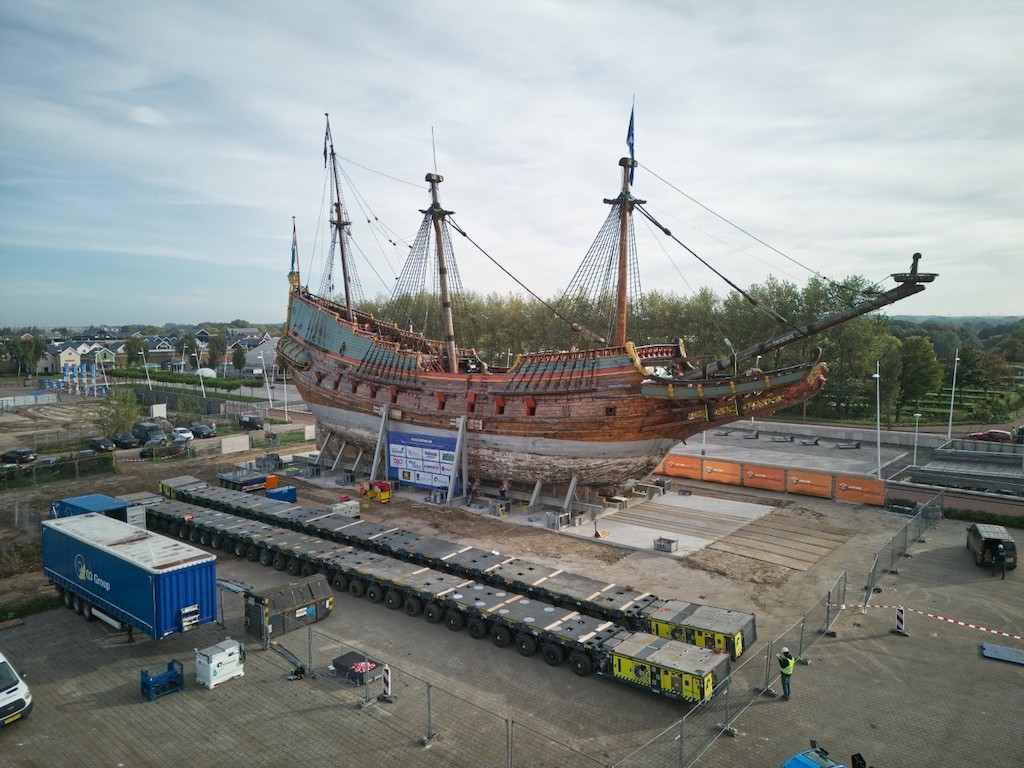
Q3 Heavy Lift assembled the Cometto SPMTs in Dordrecht before transporting them by pontoon to Amsterdam. There, the two trains drove beneath the cradle carrying the vessel before the complete transport arrangement was shipped to Lelystad.
For the roll-off, the pontoon was positioned against a purpose-built ramp designed to maintain a shallow approach angle. Load-spreading and crane mats were installed across the route, while the entire 250-metre path was surveyed for ground pressures, subsoil conditions and underground services.
After leaving the pontoon, the two SPMT trains manoeuvred the ship across the Markermeer dike before turning and reversing the vessel into its final position.
“It is only 250 metres, but if you drive over a pipeline you didn’t know was there, you have a problem. That groundwork is what makes the difference on a job like this,” said Ard Suvaal, Project Manager at Trans Global Projects.
The following day, Q3 Heavy Lift used a jacking system to transfer the vessel from its transport arrangement onto the permanent concrete foundation.
The Batavia now stands more than eight metres higher than at its former quayside berth, allowing the timber structure to remain dry and providing improved access for long-term maintenance.
The historic vessel will become the centrepiece of the redeveloped Museum Batavialand, scheduled to open at the end of 2028.