
Mammoet Delivers Oversized Transformer with AL600 Girder Frame Trailer
Mammoet transported an oversized transformer from Hitachi Energy’s factory in Ludvika to Köping Port using its high-capacity AL600 girder frame trailer after the unit exceeded Sweden’s rail transport weight limits. Working with Maersk Project Logistics and Hitachi Energy, Mammoet developed…
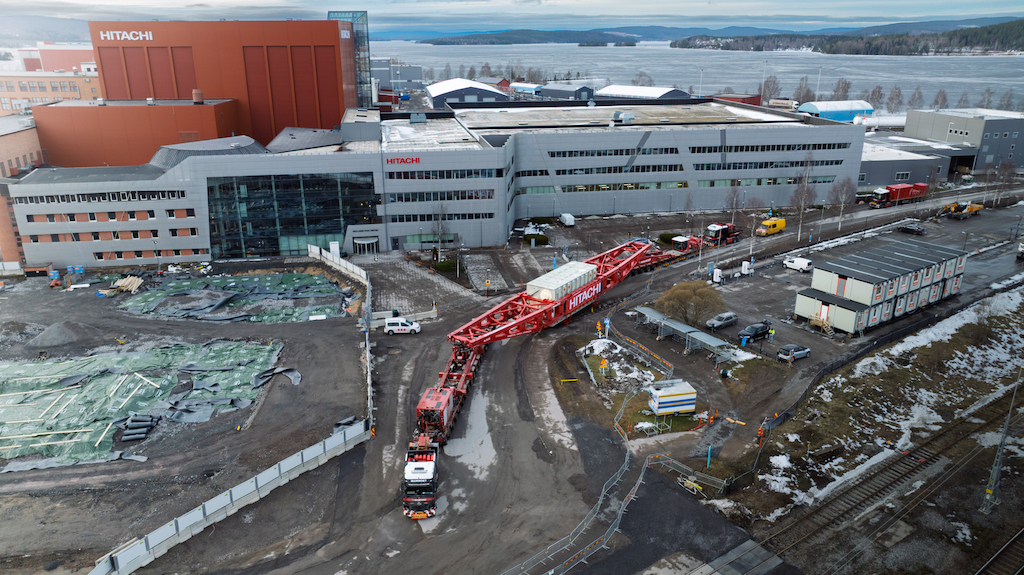
Mammoet transported an oversized transformer from Hitachi Energy’s factory in Ludvika to Köping Port using its high-capacity AL600 girder frame trailer after the unit exceeded Sweden’s rail transport weight limits.
Working with Maersk Project Logistics and Hitachi Energy, Mammoet developed a road transport solution for the heavy transformer, which was destined for shipment to China. The AL600 girder frame trailer was selected because it distributes loads over a greater distance while keeping cargo positioned low to the ground, reducing road impact and allowing the transport to pass beneath overhead obstacles with minimal route modifications.
To meet Hitachi Energy’s lashing requirements, Mammoet engineers designed and fabricated a bespoke adapter for the girder frame, while Hitachi modified the transformer interface to ensure seamless integration. Maersk Project Logistics managed the overall project, including ocean transport, route planning and road preparations, with Mammoet providing engineering support for permitting.
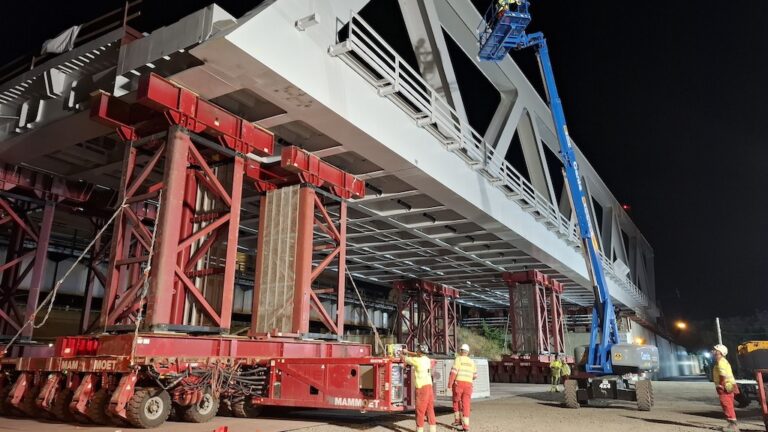
Limited space at the manufacturing facility required the girder frame to be manoeuvred into position using two 14-line self-propelled modular transporter (SPMT) combinations before the transformer was lifted into the frame by a 500-tonne crane. Once outside the factory, the SPMTs were replaced with two 19-line conventional trailer combinations powered by two prime movers and a hydraulic drive system.
Stretching almost 100 metres in length and weighing more than 800 tonnes, the transport travelled 130 kilometres from Ludvika to Köping Port over two nights. One of the most challenging sections came immediately outside the factory, where a temporary crossing had to be installed over two railway lines within a strict three-hour window to avoid disrupting rail traffic.
“This was one of the biggest challenges when it came to the schedule,” said William Soeters, Project Manager at Mammoet. “We had just three hours to prepare the crossing, move the convoy across and remove everything before train services resumed.”
At Köping Port, the transformer was loaded onto a RoRo vessel for transfer to Norrköping before being placed in a laydown area to await collection by a heavy-lift vessel bound for China.
The project demonstrates how specialist transport engineering and tailored equipment can overcome the increasing logistical challenges associated with transporting next-generation power infrastructure.