
Rising tensions linked to the Iran conflict are beginning to impact global air cargo markets, tightening capacity on key trade lanes and pushing freight rates higher.
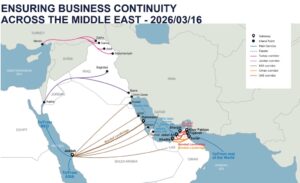
Airlines based in the Middle East play a crucial role in the global cargo network, acting as major hubs connecting Asia, Europe, Africa and the Americas. Disruptions affecting regional operations and airspace routings are now creating ripple effects across international air freight flows.
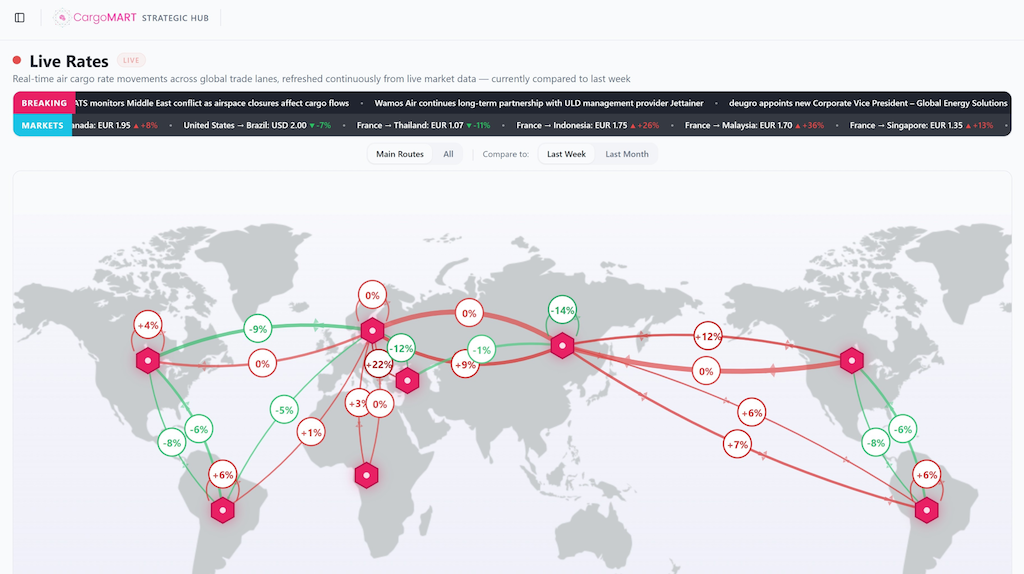
Recent market data shows significant rate increases on several routes. Freight rates between Europe and the Middle East have risen by 22 percent, while Asia to North America has increased by 12 percent and Europe to Asia by 9 percent. Other trade lanes have remained stable or have softened slightly as cargo flows rebalance, with North America to Europe rates down by 9 percent and Asia to Europe declining by around 1 percent.
The situation is also affecting energy markets. The conflict has contributed to rising oil prices, which are expected to translate into higher fuel surcharges for air freight in the coming weeks. This could place additional pressure on global shipping costs.
Industry observers note that the rapidly changing environment is increasing the importance of real time market data. Platforms such as CargoAi are allowing users to track rate developments and operational changes as they happen, helping freight forwarders and logistics providers respond more quickly to disruptions in the global supply chain.
With air cargo markets evolving quickly in response to geopolitical events, relying on traditional datasets that often come with a delay of several weeks is becoming increasingly difficult for logistics professionals seeking to navigate shifting conditions.