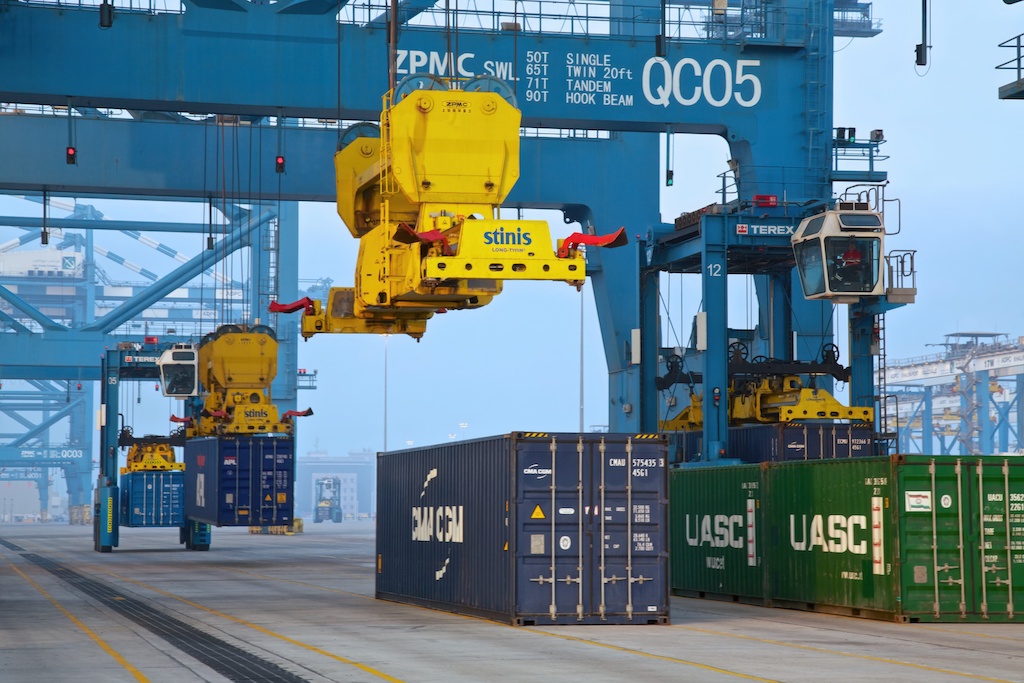
CM Labs Simulations and Stinis have announced a new collaboration focused on advancing simulation technology for tandem spreader operations within the global container handling sector.
The partnership will see Stinis spreader designs digitally modelled using CM Labs’ Vortex Studio high fidelity simulation platform, allowing ports and training centres to improve operator readiness, operational safety and handling efficiency for complex lifting operations.
The companies will present the project during TOC Europe 2026 in Hamburg, where growing operational demands on container terminals remain a major industry focus.
By combining Stinis’ spreader engineering expertise with CM Labs’ physics based simulation technology, the collaboration aims to support the testing and validation of advanced spreader concepts, particularly for tandem headblock operations. The approach allows operators to gain experience with complex lift scenarios in a virtual environment before working on live terminal equipment.
Stinis currently has more than 8,000 spreaders installed at deep sea terminals worldwide across Europe, Asia, Africa and the Americas. Through the partnership, terminal operators will be able to train personnel using digital models that closely replicate the exact spreader configurations installed within their facilities.
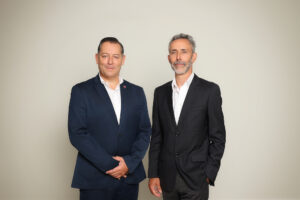
Tom Mastenbroek, Sales Director at Stinis, said operator confidence is essential for tandem spreader operations and that high fidelity simulation provides a safe and effective environment for familiarisation before live operations begin.
Lisa Barbieri, Vice President of Marketing and Strategic Partnerships at CM Labs, added that simulation is increasingly becoming a critical tool not only for crane operation training but also for preparing operators for specific workflows, equipment configurations and productivity expectations within modern terminals.
The initiative reflects growing investment across the port sector in digital technologies designed to improve training, safety and operational performance while reducing reliance on live equipment during onboarding and skills development.