
Sennebogen Crawlers Work on Munich U5 Extension
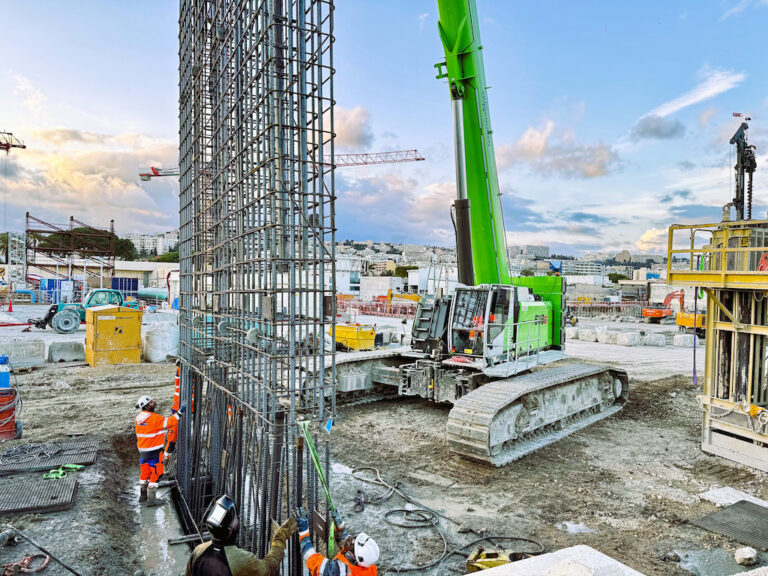
A 50-tonne Sennebogen 653 E telescopic crawler crane is handling reinforcement cages, drilling equipment and materials on the extension of Munich’s U5 underground line at Pasing station, where construction is taking place around 25 metres below ground in a tightly…
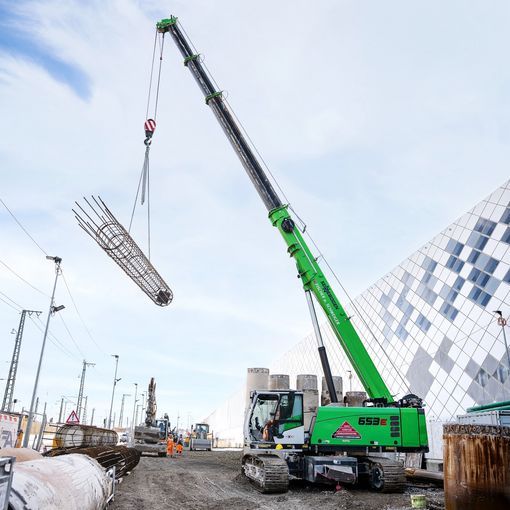
A 50-tonne Sennebogen 653 E telescopic crawler crane is handling reinforcement cages, drilling equipment and materials on the extension of Munich’s U5 underground line at Pasing station, where construction is taking place around 25 metres below ground in a tightly constrained urban site.
The project involves construction of a new underground station approximately 400 metres long beneath Pasing station. ARGE U5 West 2, comprising Wayss & Freytag, Max Bögl and Züblin, is carrying out the works alongside an active railway station and heavily trafficked road.
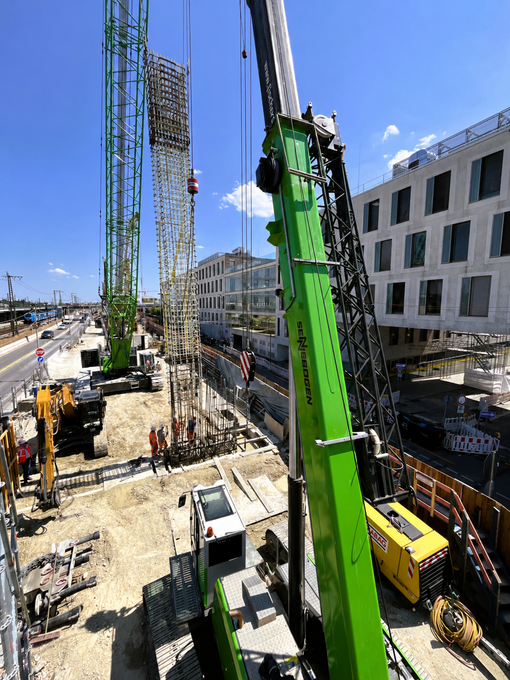
The 653 E has been working on the project for around nine months, supporting both bored pile and diaphragm wall construction.
Its lifting duties include six-metre drill pipes measuring 1.5 metres in diameter, tremie pipe boxes, pumps, smaller machinery and reinforcement cages. The crane also unloads and repositions materials around the site while working alongside large drilling rigs and specialist foundation equipment.
The compact crawler configuration allows the 653 E to manoeuvre in areas where larger cranes have less space available. Operators can also use remote control to leave the cab and select a better viewing position when working close to other equipment.
For heavier lifts, a 200-tonne Sennebogen 5500 crawler crane was deployed alongside the 653 E.
The larger crane was primarily used to install reinforcement cages for the diaphragm walls, handling loads of up to 35 tonnes and working over longer distances. The smaller 653 E remained responsible for lighter and more frequent lifting tasks in the most restricted parts of the site.
Once the heavier diaphragm wall lifts were completed, the 5500 left the project, while the 653 E remained on site as construction progressed.
The combination allowed heavy lifting and specialist foundation operations to continue in parallel despite the limited space available at Pasing station.