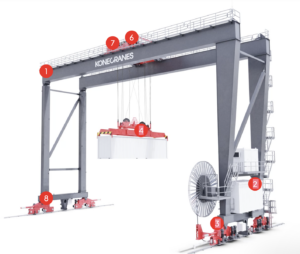
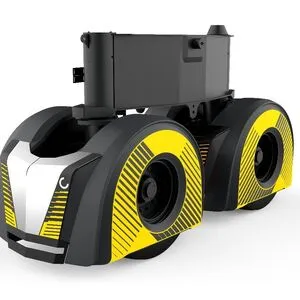
Konecranes has launched a fully automated gantry long-travel feature for mixed-traffic container yards, taking automated rubber-tyred gantry (RTG) crane operations a step further.
The new system is available for both new Konecranes automated RTGs and as a retrofit solution for existing fleets, allowing terminal operators to expand automation capabilities without replacing current equipment.
Developed from the company’s A-RTG 2.0 concept, the technology enables fully automated gantry movement without human supervision or the need for restrictive fencing around truck lanes. Following extensive development and testing, the solution is already operating at several terminals and is now available for broader deployment.
According to Konecranes, the automated gantry travel system improves both safety and efficiency through multiple layers of obstacle detection. Long-range 3D lidar technology can identify large objects up to 50 metres ahead, while a safety-rated laser scanner provides close-range detection and stopping capability when required.
The system also incorporates safety encoder feedback and mechanical protective covers to support reliable crane movement and reduce collision risks in daily terminal operations.
“Automating gantry long travel reduces manual workload and allows operators to focus where they are needed, while maintaining safe operation in mixed traffic environments,” said Ville Mannari, technology director, port solutions at Konecranes.
The automated gantry travel feature is certified to PLd safety standards under ISO 13849-1 and has been verified against ISO 3691-4 requirements for driverless industrial vehicles, supporting deployment in highly regulated markets including Europe.
The launch forms part of Konecranes’ Path to Port Automation programme, which provides terminals with a phased approach to increasing automation, productivity and safety across container handling operations.