
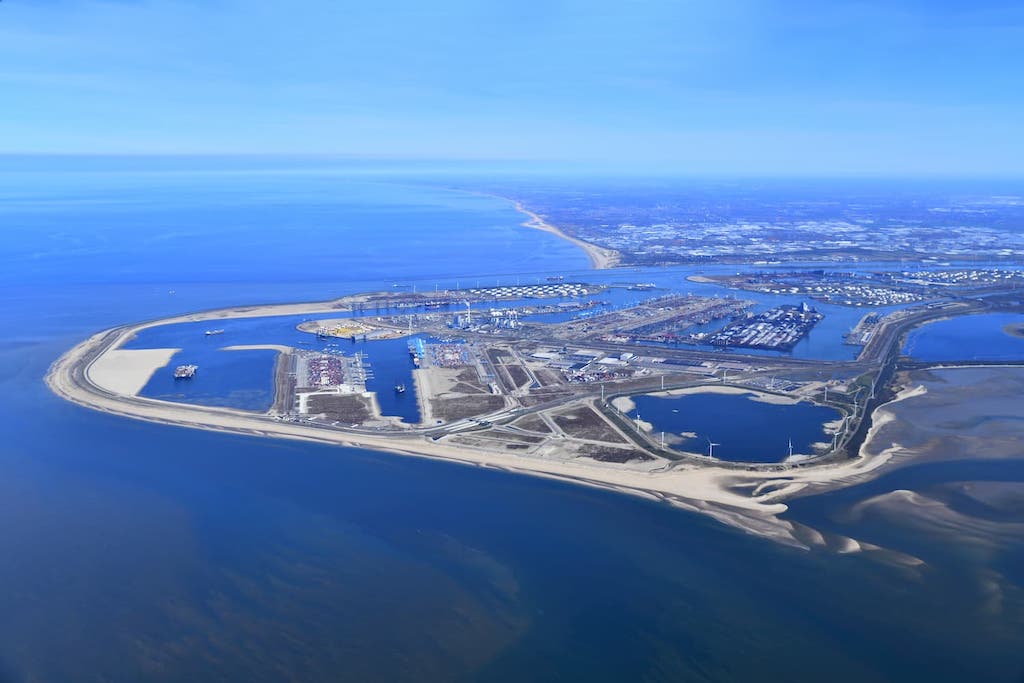
Throughput at the Port of Rotterdam fell slightly in 2025, declining by 1.7 percent to 428.4 million tonnes, reflecting a challenging year for European industry and global trade. The steepest drop was recorded in dry bulk, down 6.5 percent, while liquid bulk slipped by 1.5 percent. Container volumes rose by 3.1 percent in TEU terms to 14.2 million, although tonnage edged down marginally.
The port saw signs of recovery in the second half of the year, but concerns remain over weak industrial investment and rising global competition. Several chemical companies announced closures or paused projects, especially in renewable fuels. Despite supportive government measures, the Port Authority believes the Dutch investment climate still lags behind other European markets.
Financial performance remained stable, with revenues rising 6.6 percent to €940.4 million and EBITDA increasing to €583.6 million. Net profit slipped slightly to €266 million due to higher depreciation and a one off impairment. Investments reached €291.4 million.
Sustainability remains a key priority, though the goal of cutting CO₂ emissions by 55 percent by 2030 is becoming harder to achieve. Major energy transition projects continue, including Air Liquide’s 200 MW green hydrogen plant and the Porthos carbon capture project, both expected online later this decade.
Looking ahead, the Port Authority is calling for long term, consistent policies to boost industrial competitiveness and support energy transition efforts. The newly published Port Vision 2050 aims to position Rotterdam as Europe’s most competitive and sustainable port through stronger public private cooperation and sustained investment.