
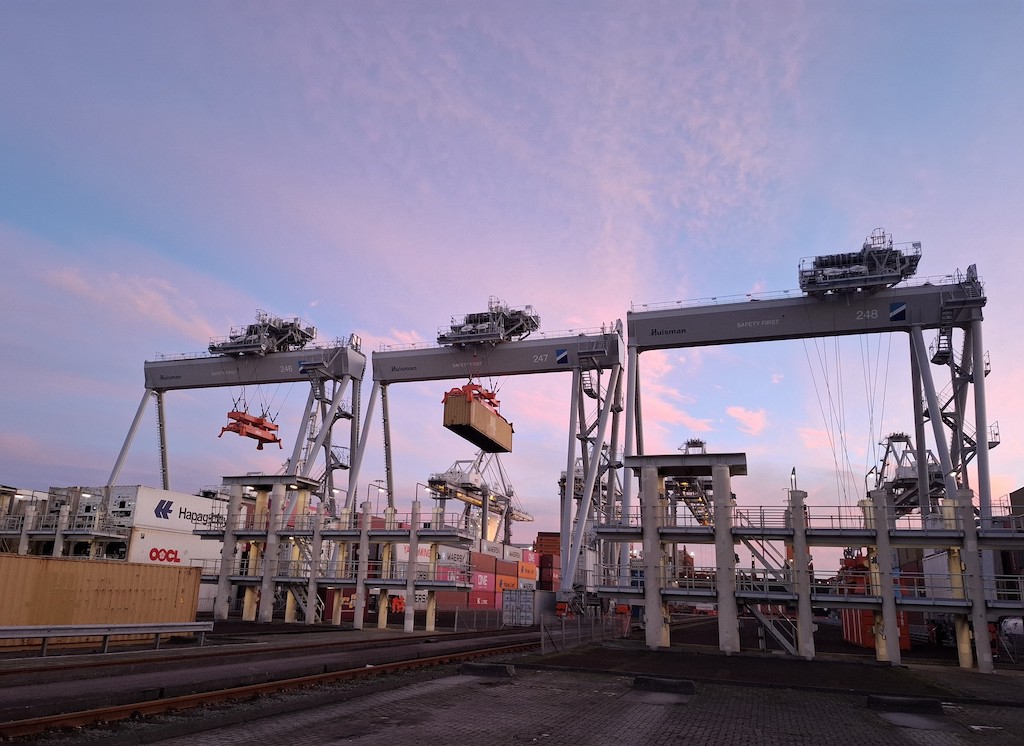
Huisman has secured a second contract from Hutchison Ports ECT Rotterdam for the delivery of 12 additional Automated Stacking Cranes, further strengthening the collaboration between the two companies. This new order follows the successful delivery of an initial series of six cranes. Of those, three are already fully operational, while the remaining units are currently in the commissioning and testing phase and are expected to enter service later this month.
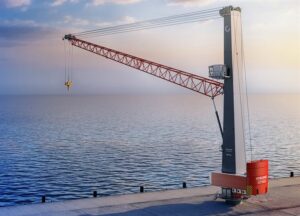
The Automated Stacking Cranes supplied by Huisman are designed to support a fully automated container handling and buffering process, enabling reliable, continuous terminal operations. Their design combines advanced positioning systems with a stiff crane structure and an optimised reeving system, resulting in high positioning accuracy for precise container stacking. Integration with the Terminal Operating System allows the cranes to operate autonomously around the clock, supporting ECT’s ambition for efficient and dependable terminal performance.
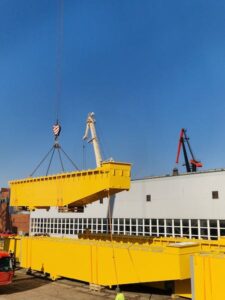
As with the previous order, production of the cranes will be distributed across Huisman’s European facilities. Welding and pre-assembly activities will be carried out in the Czech Republic, while final assembly will take place at the Huisman yard in Schiedam, the Netherlands. Commissioning and testing will be conducted at the ECT Delta Terminal on the Maasvlakte in the Port of Rotterdam. The close proximity of Huisman’s facilities to the terminal offers clear logistical advantages and contributes to a more sustainable execution of the project.
According to Mike van Wingerden, Business Line Manager Port Equipment at Huisman, ECT’s decision to place a second order reflects the strong partnership that has developed over the past year. He notes that ECT’s high expectations for reliability and performance closely align with Huisman’s own standards, and that the company looks forward to delivering another series of cranes that meet these requirements.
The new Automated Stacking Cranes feature a safe working load of 41 tonnes under the spreader, a stiff eight-point rope reeving system, stacking heights of up to one over five or one over six, and a stack width of up to eleven containers. They are designed for a service life exceeding four million handling cycles, supporting long-term, high-intensity terminal operations.