

As offshore wind turbines continue to increase in size to deliver higher power output with fewer units per wind farm, the foundations required to support them are becoming significantly larger and heavier. Handling and transporting these XXL monopiles presents growing logistical and technical challenges, particularly at port facilities with limited space and load-bearing capacity.
Mammoet has addressed these challenges through the development of new lifting and transport solutions, demonstrated during the marshalling operations for the 315 MW Windanker offshore wind farm in the German Baltic Sea. Working alongside Van Oord, Mammoet supported the onshore transport and lifting of 21 monopile foundations at the port of Rønne, Denmark.

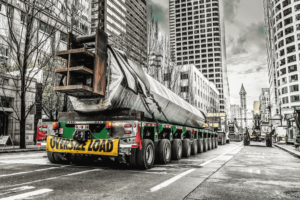
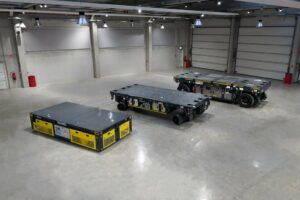
The monopiles, shipped from Spain in seven batches, included units weighing up to 2,150 tonnes and measuring approximately 87 metres in length. Using Mammoet’s XXL monopile transport system, 90 axle lines of self-propelled modular transporters (SPMTs) safely lifted the monopiles from their grillages and transported them to temporary storage areas. The system’s increased stroke allowed deeper sand bunds to be used, improving support while reducing material requirements.

A key innovation was the use of Mammoet’s newly developed MTC1600 terminal cranes, specifically engineered to lift next-generation monopiles directly into the water for offshore feedering. With a combined lifting capacity increased to 3,200 tonnes to match Van Oord’s installation vessel Svanen, the cranes enabled efficient operations without the need for quay reinforcement or additional civil works.

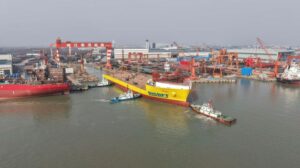
Once capped to ensure watertight integrity, the monopiles were lifted into the sea by the MTC cranes and towed to Svanenfor final installation. The crane design, featuring ballast positioned further from the boom pivot point, significantly reduced ground pressure compared to conventional crawler cranes.
By transforming the port of Rønne into a streamlined marshalling hub, Mammoet enabled continuous feedering to the offshore installation vessel, reducing downtime and improving overall project efficiency. The project highlights how innovation and collaboration are enabling ports and contractors to meet the demands of the next generation of offshore wind developments.