
Hyster will present a range of high capacity port handling solutions at TOC Europe 2026, taking place from 19 to 21 May at Hamburg Messe in Hamburg. The company will showcase equipment designed to combine strong performance with flexible configuration options for modern port and terminal operations.
The focus of the exhibit will be on helping operators identify the most suitable forklift and container handling solutions based on their operational needs, regardless of the power source. Visitors will have the opportunity to explore both internal combustion engine and electric equipment while gaining insights into emerging power technologies such as lithium ion batteries, hydrogen fuel cells, diesel and alternative fuels including HVO100.
According to Junior van Remortele, director of big trucks EMEA at Hyster, port and terminal operations face very different operational demands, making flexibility in equipment selection essential. The company’s strategy is therefore centred on offering configurable equipment and a broad range of power technologies so operators can choose solutions that best match their infrastructure, sustainability targets and productivity requirements.
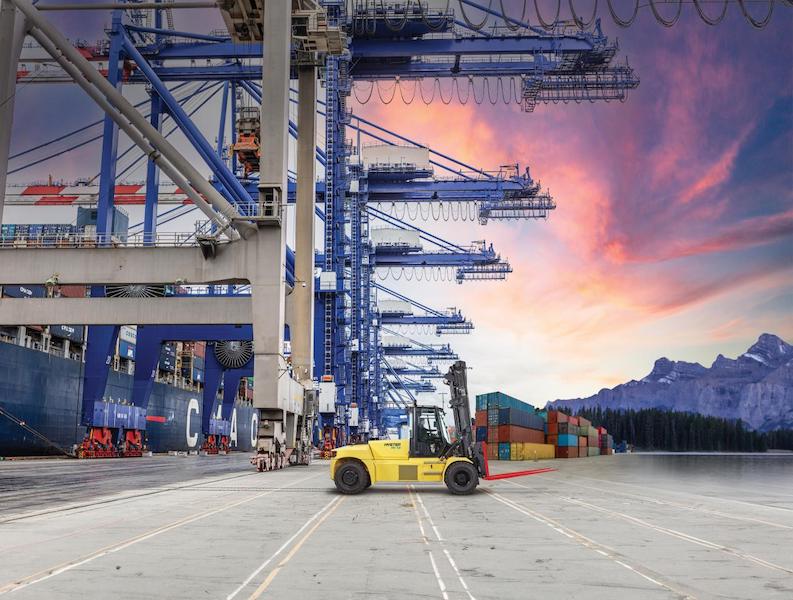
A key highlight at the stand will be the Hyster J16XD12 integrated lithium ion high capacity forklift. The electric truck is designed to deliver performance comparable to internal combustion alternatives while offering scalable battery capacity to match varying duty cycles and charging requirements. All Hyster electric big trucks are equipped with the Combined Charging System, a global electric vehicle charging standard that enables ports and terminals to scale charging infrastructure efficiently across multiple equipment types.
The Hyster J10 to 18XD series is designed to provide strong performance in demanding port environments while supporting zero emission operations. The lithium ion battery technology helps eliminate tailpipe emissions, reduce fuel consumption and lower maintenance requirements. As ports and terminals continue to balance productivity with sustainability goals, solutions such as these offer operators greater flexibility in configuring fleets that meet both operational and environmental targets.