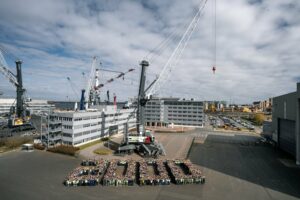

Spliethoff Group has officially launched a next-generation maritime training simulator in Manila, strengthening its commitment to safety and operational excellence in heavy-lift and crane operations. The facility was inaugurated on 10 December by H.E. Marielle Geraedts, Dutch Ambassador to the Philippines.
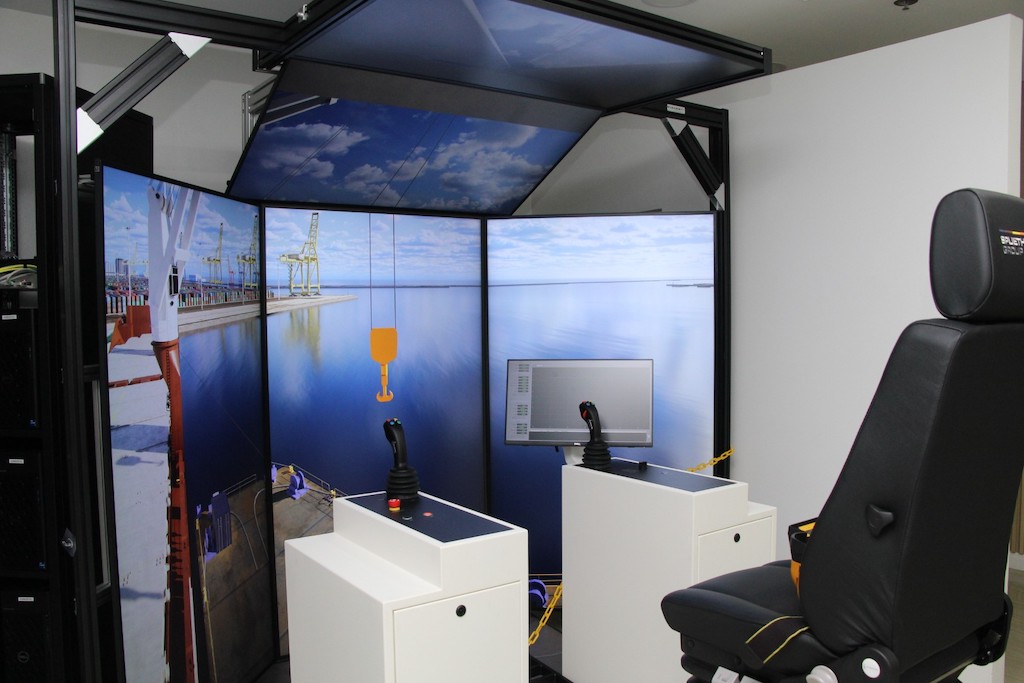
Developed by the Maritime Research Institute Netherlands (MARIN), the advanced crane and ballast simulator is designed to provide highly realistic training for seafarers involved in heavy-lift, ro-ro and offshore operations. It represents the latest step in Spliethoff Group’s long-term investment in simulation-based training, which began in 2015.
With the original simulator systems now reaching the end of their lifecycle, MARIN was commissioned to deliver two customised next-generation units. The first is now operational in Manila, while a second simulator will be installed at Spliethoff Group’s headquarters in Amsterdam.
The system features an immersive 3D, cabin-style environment powered by MARIN’s Dolphin software, accurately replicating vessel behaviour influenced by waves, wind, currents and crane movements. This allows crews to assess safe operating limits across different sea states and operational scenarios. The simulator includes multiple workstations and an expanded fleet library, featuring BigLift Shipping’s DP2 MC-Class deck carriers and Spliethoff’s DP2 B-Type vessels, including the innovative pipe-handling crane installed on these ships.
In addition to crane handling and ballasting exercises, crews can simulate complex offshore and DP2 operations. Project scenarios can also be pre-simulated, enabling officers to prepare for specific conditions and providing clients with a clear visualisation of planned operations.
The simulator technology is based on the same hydrodynamic software used at MARIN’s Seven Oceans Simulator Centre in Wageningen.
Erwin Meijnders, Crew Director at Spliethoff Group, said: “Safety and precision are at the heart of our operations. This investment demonstrates our commitment to equipping our crews with the best possible tools and training to handle complex cargo and DP2 operations safely and efficiently.”