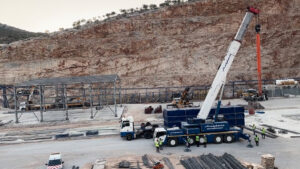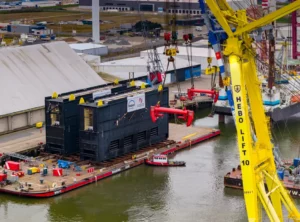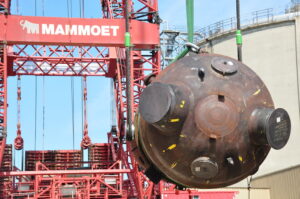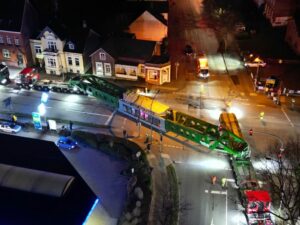

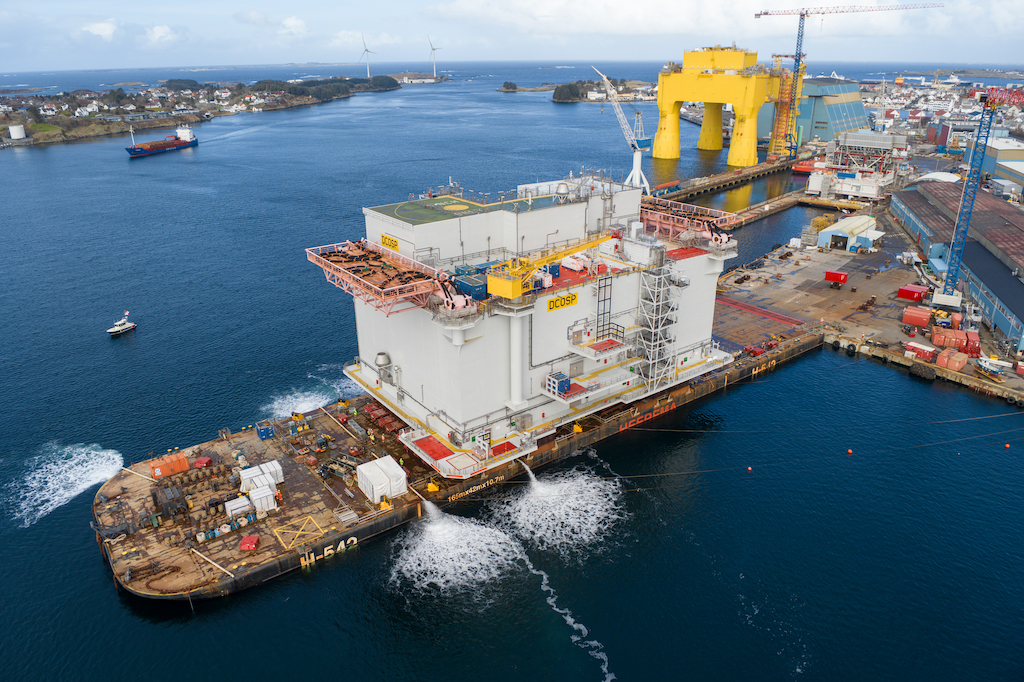
Mammoet has completed the complex transportation and weighing operations for the three offshore substations powering Dogger Bank Wind Farm, set to become the world’s largest offshore wind farm once fully operational. Located in the North Sea off the Northeast coast of England, Dogger Bank will deliver 3.6GW of renewable energy, enough to power around six million homes every year. The project is being developed in three phases: Dogger Bank A, B and C, by SSE, Equinor and Vårgrønn.
The substations, fabricated by Aibel, play a vital role by collecting and converting the electricity generated before it is transmitted to shore. Construction was split across two continents, with steel structures built in Laem Chabang, Thailand, before being transported to Haugesund, Norway, for installation of transformer equipment and final assembly. This required extensive international coordination to meet tight schedules.
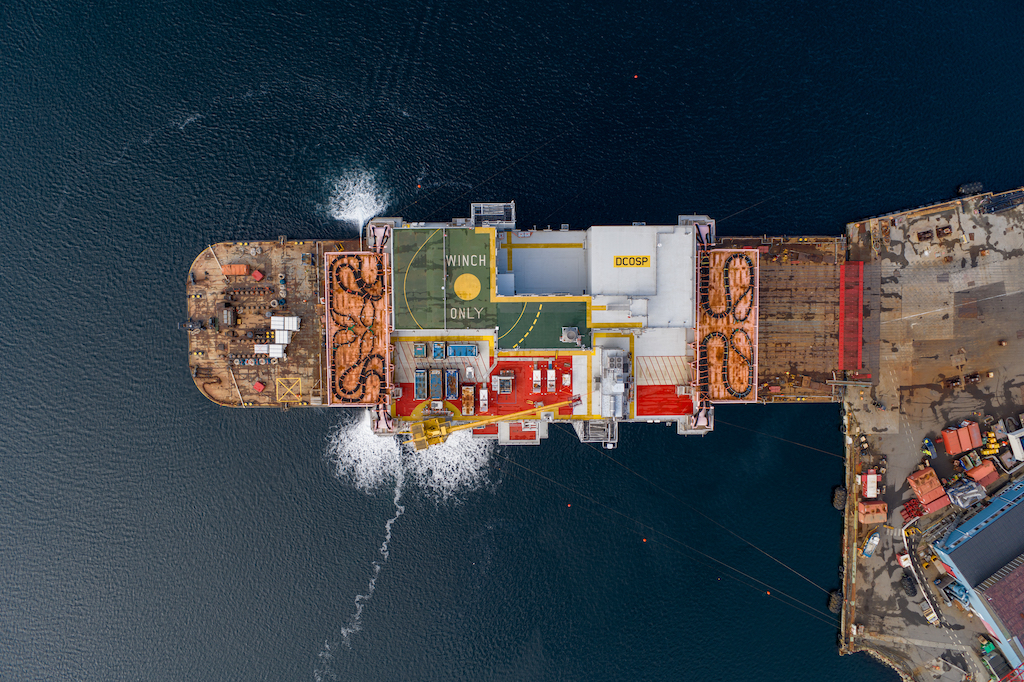
Mammoet supported Aibel during each stage of the project: load outs in Thailand, load ins in Norway, and the final load outs for transport to the North Sea. One of the major challenges was sourcing enough Self Propelled Modular Transporters to accommodate the substations’ enormous size. In total, 682 axle lines were deployed from Mammoet’s global fleet.
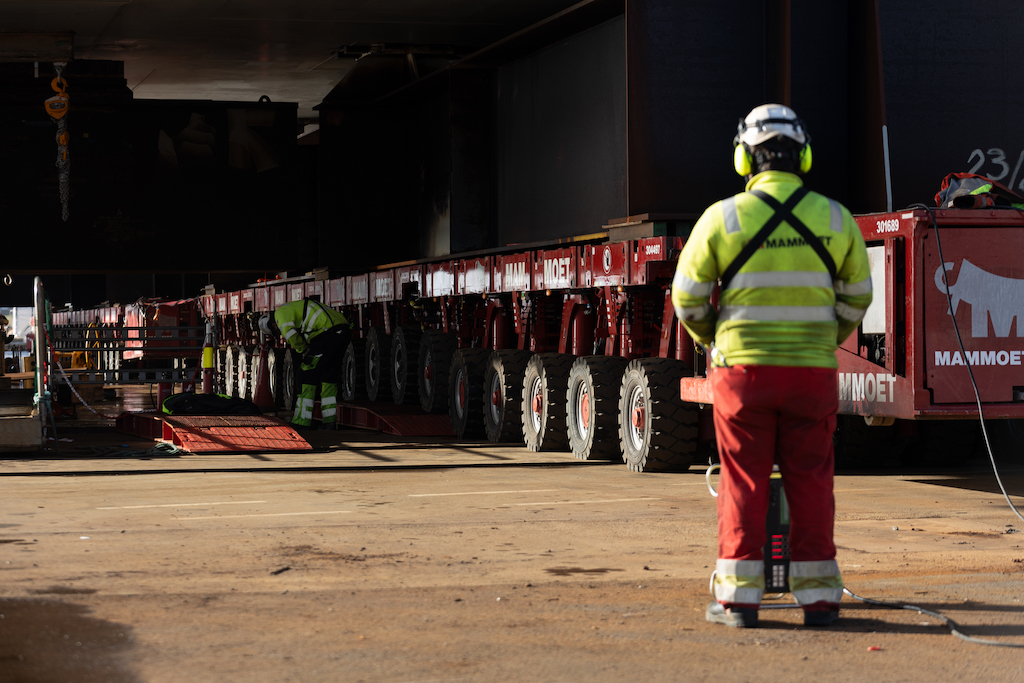
In Thailand, the modules, weighing around 7,500 tonnes at that stage, were driven one kilometre over public roads to reach the port. Once completed in Norway and weighing approximately 9,350 tonnes, each structure was moved from the vessel, positioned on temporary supports, then weighed using 36 jacks and load cells to confirm the final weight and center of gravity.
Close engineering collaboration with Aibel allowed the teams to optimize equipment and processes. Over the course of three years, efficiencies gained meant that the final Dogger Bank C load out was completed a full day faster than previous operations.